A Colorful Herd
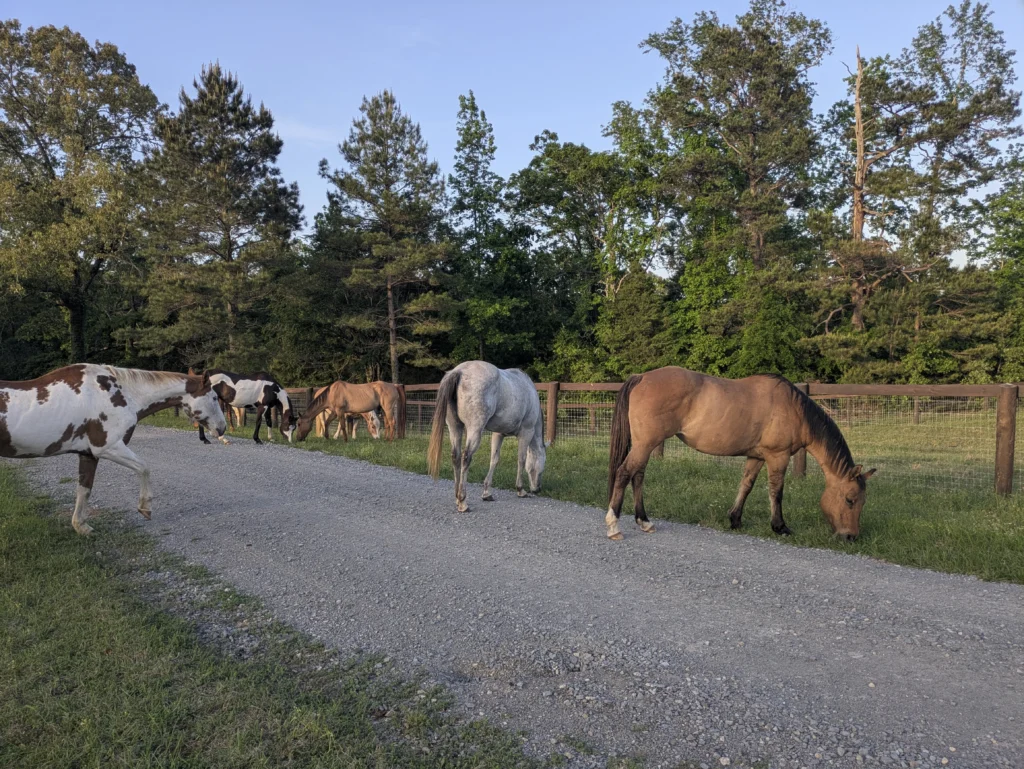
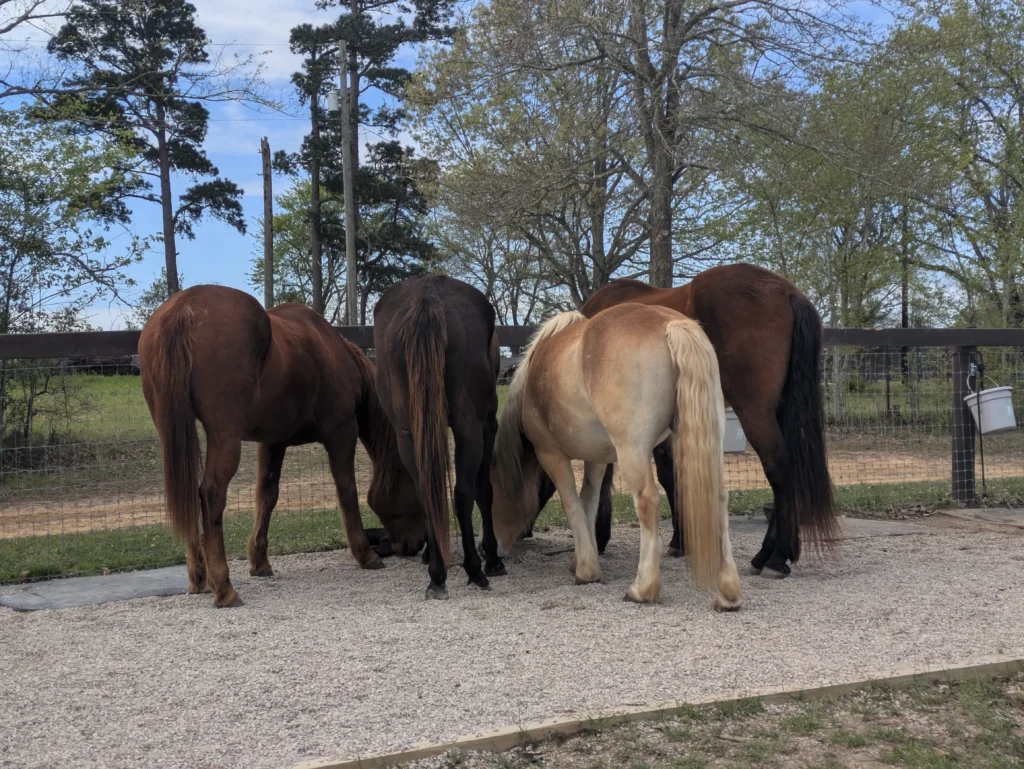
Horses come in all different colors. While we don’t have every coat color at the ranch, we have a wide variety. Our horse herd is composed of the coat colors: bay, sorrel, chestnut, pinto, dun, grey, palomino, and black.
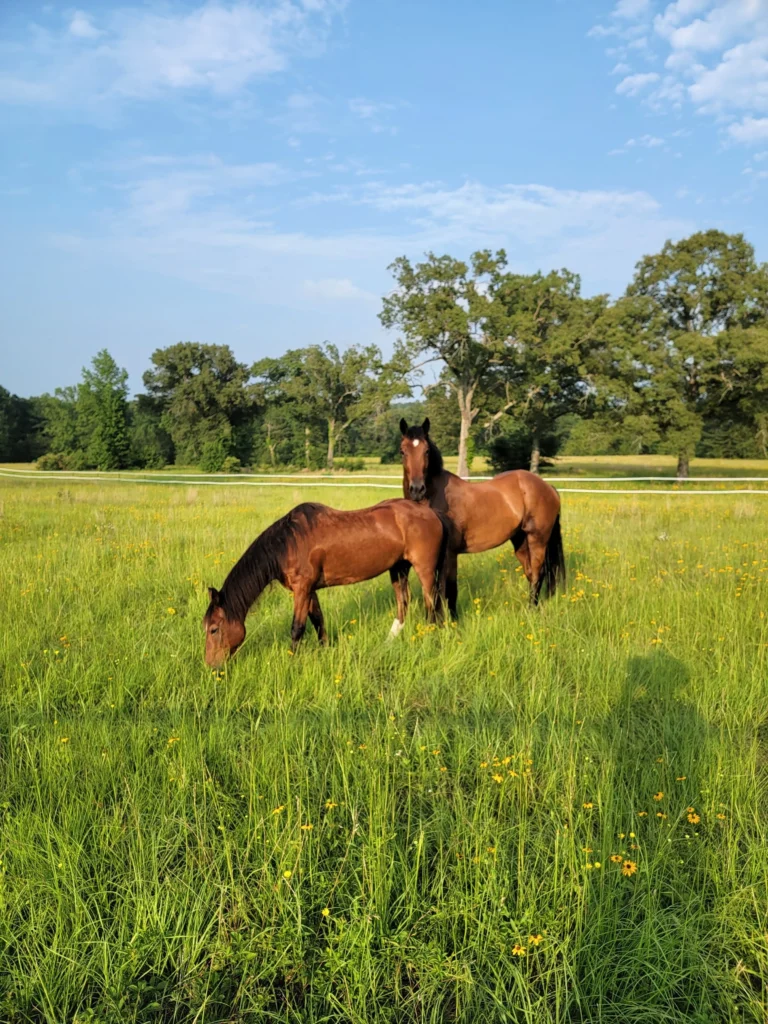
Bay Is the most common color at the ranch. It is the color of a horse that has a brown body and black “points”. In horse color terminology, “points” refers to the horse’s mane, tail, lower legs, and the tips of its ears.
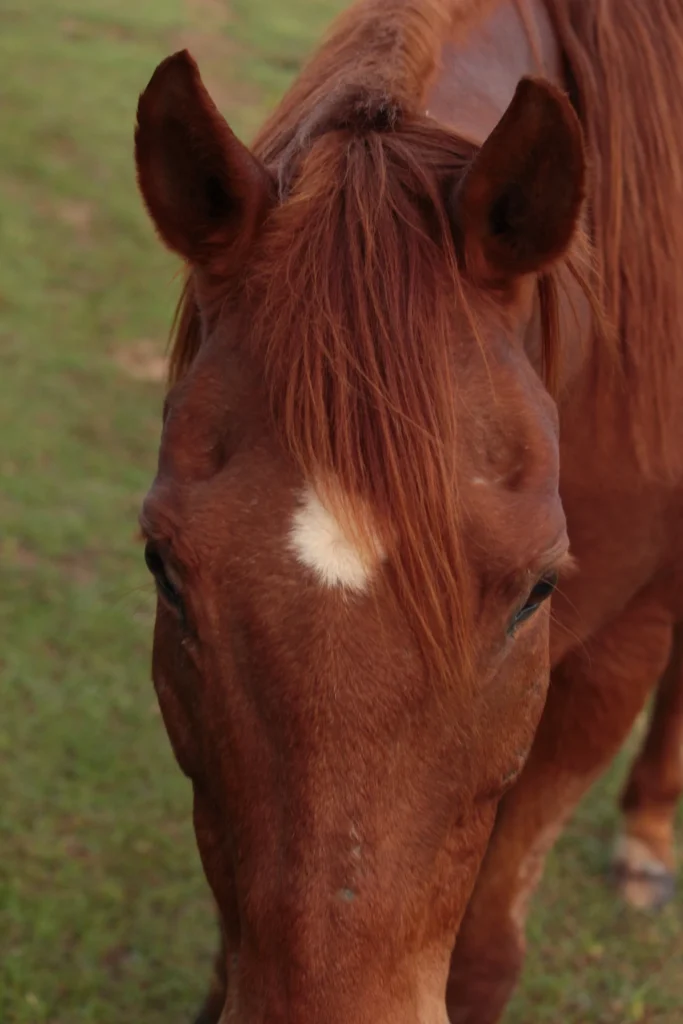
Sorrel Is the term for when a horse is entirely one shade of red/tan/brown. The mane, tail, and body are all the same color. Some people use the term “chestnut” for this coat color as well.
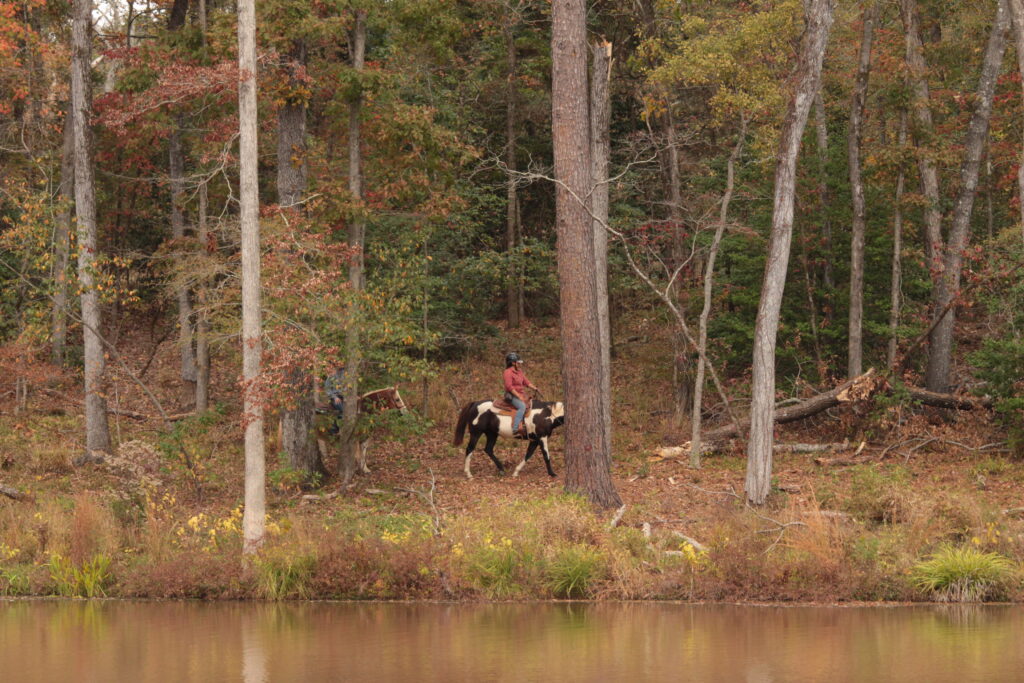
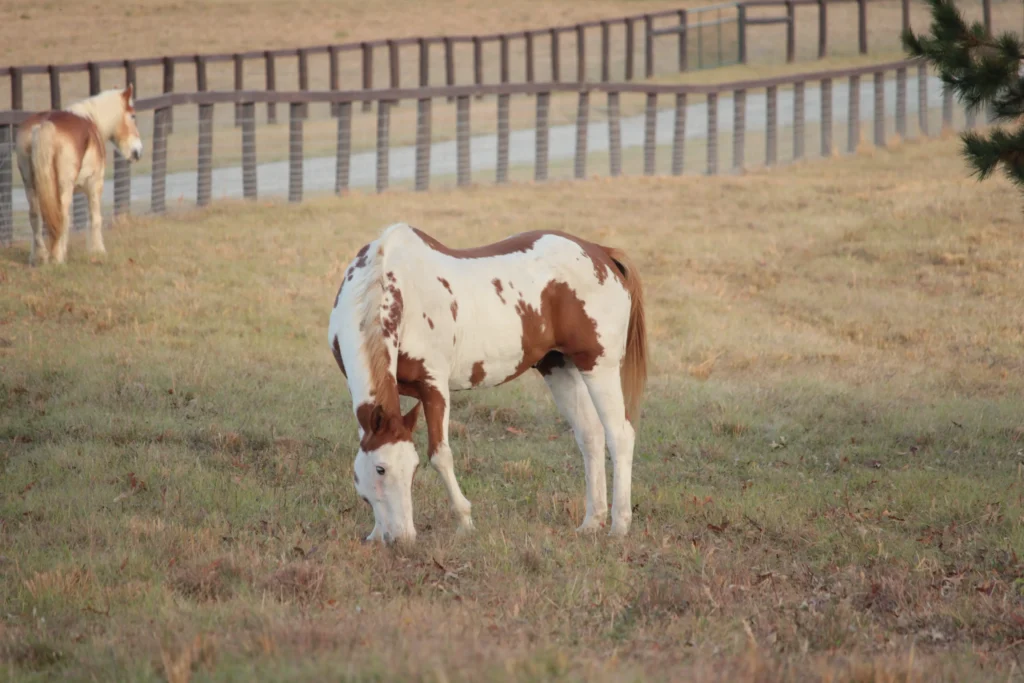
Pinto Commonly called paint, is a horse that has large sections of white hair and other sections of another color. In our herd, we have two pintos: a black & white horse as well as a brown & white horse.
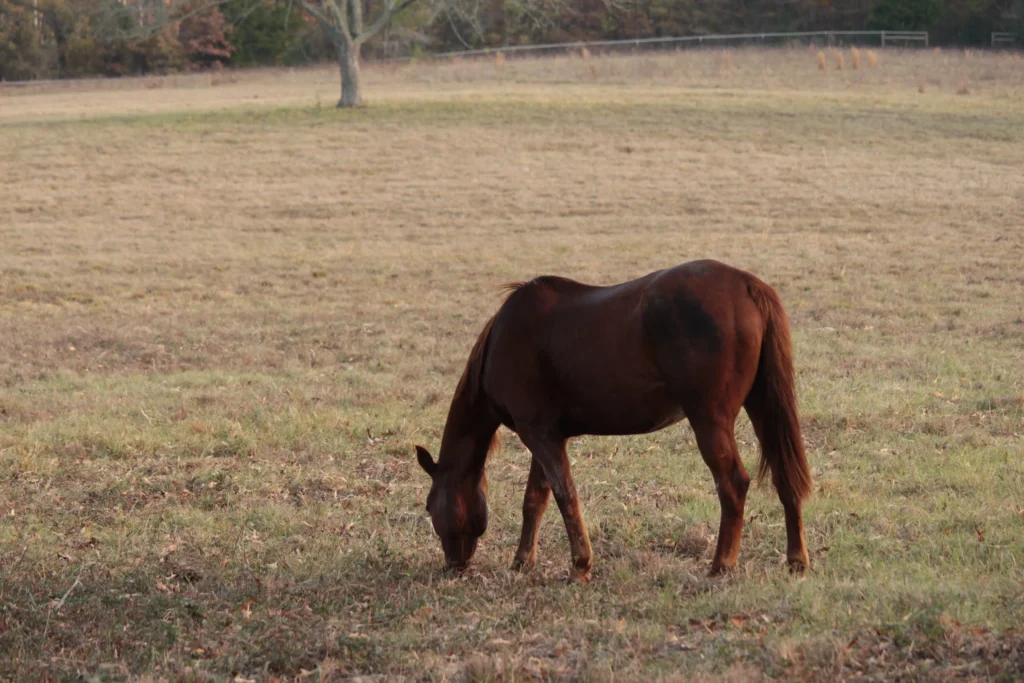
Chestnut Can be a confusing term because it can be used in different ways. Sometimes people use it to describe sorrel. For our herd, we use “chestnut” to describe the horses that have the sorrel color but with a flaxen mane/tail and “pangare modifier”. The pangare modifier causes the dilution of color around the muzzle, belly, legs, flank, and sometimes around the eyes. Our horse, Tommy, is the breed of horse called Halflinger. Halflingers are always chestnut in color.
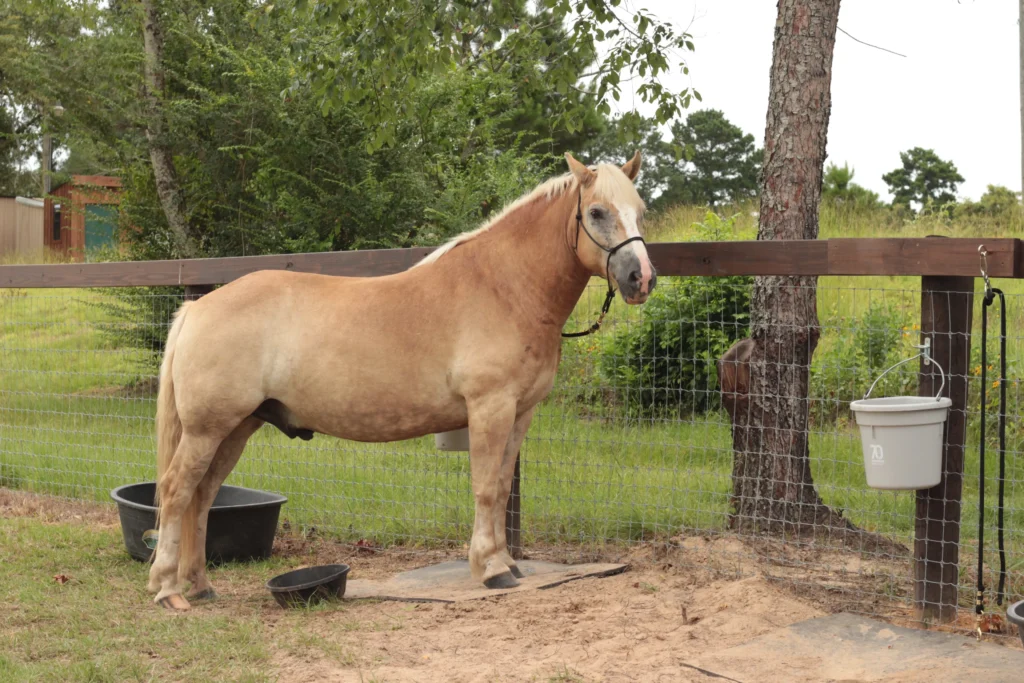
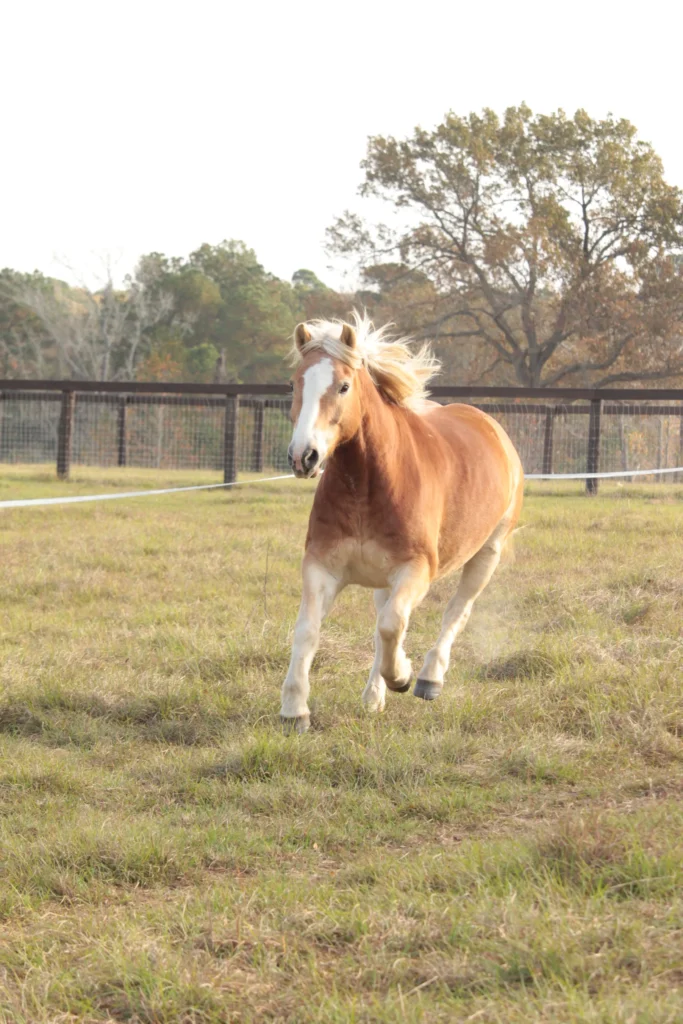
Tommy in the summer (left) compared to him in the winter (right).
Fun Fact: A horse’s coat color may vary with the seasons. Generally summer coats are lighter in color which helps keep the horse cool. The term “sunbleaching” is used to describe a bay or black horse that has become much lighter in color. In the colder months, a darker coat absorbs more sunlight providing additional warmth.
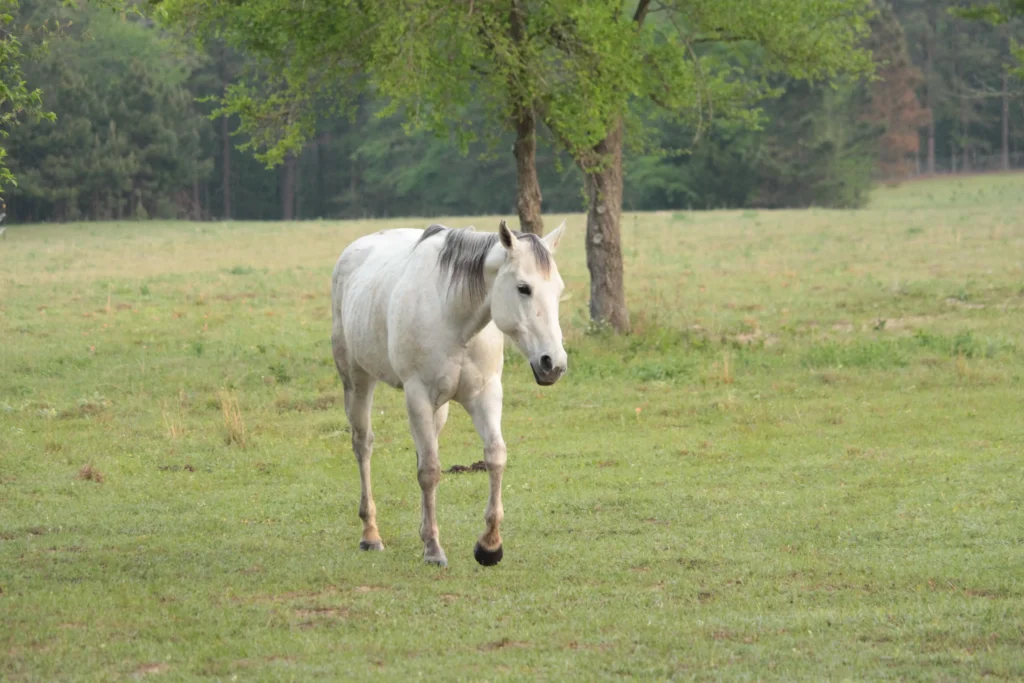
Grey Is a horse that generally has dark skin but white hair. It can present in many different ways: as large circles “dapples”, tiny speckles “fleabitten”, or over the entire body. Oftentimes grey horses are born dark in color but lighten over time. Our horse, Silver, has a light colored body but darker mane and tail.
Black: Perhaps the most famous color but not actually a common color, a black coat means the hair, mane, tail, and legs are all black in color. In the Texas summer, it is common that black horses can fade to a lighter bay or brown color. Proper nutrition, UV protection, frequent grooming, and rinsing off sweat, are a few ways to protect a black horse’s coat.
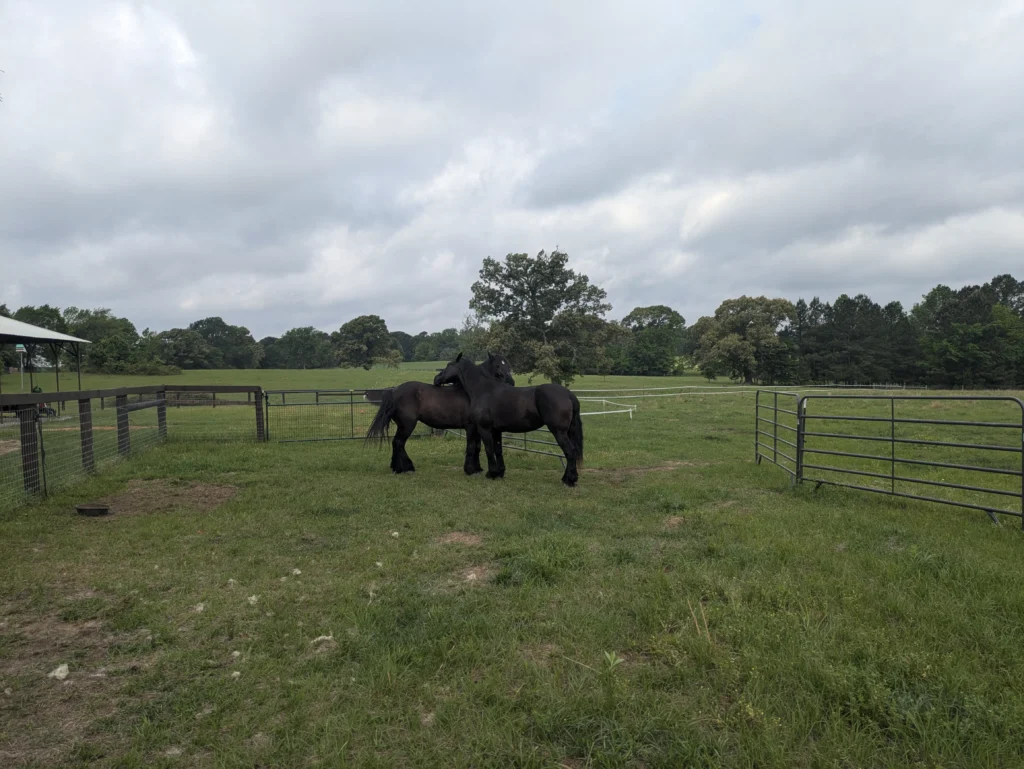
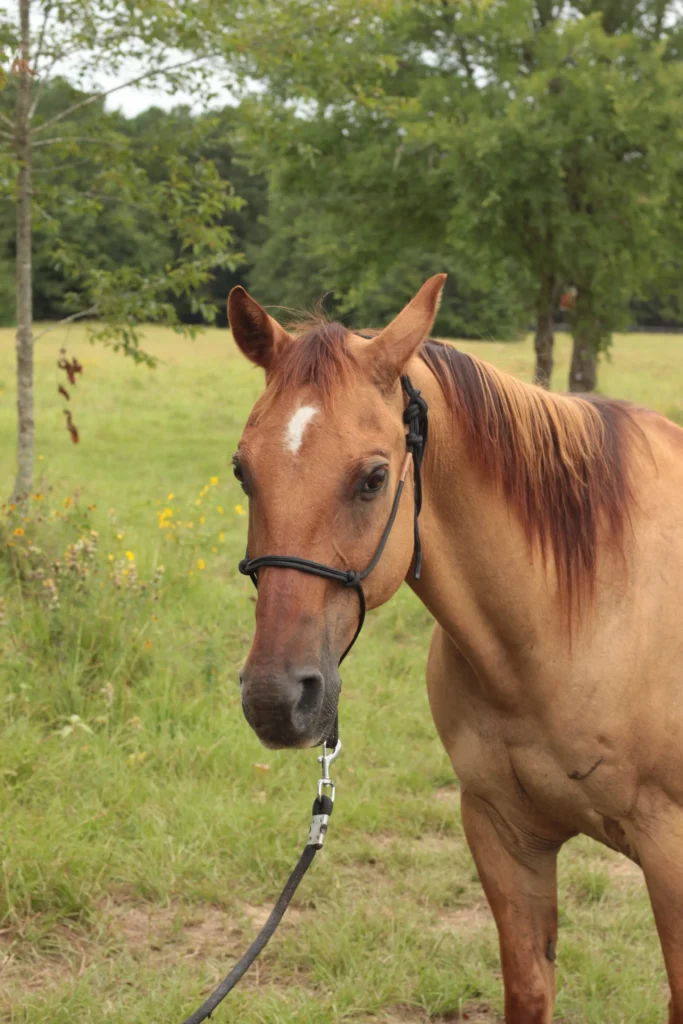
Dun Is a color gene that modifies other coat colors by giving the horse a darker stripe down the back of the horse. Other areas that may be darker include: mane, tail, tips of the ears, lower legs, zebra-like marks on the upper/mid leg, and a stripe across the withers. A dun can be in three shades: red, black, and bay. One of our horses, River, is a red dun, meaning his base color is sorrel but with dun factors. His mane looks like it has highlights. Grulla is the common term for a black horse with dun factors. These horses often have a grey/mouse colored body and then black mane and tail with dun factors. Bay dun is commonly confused with buckskin. Both are base color bay and have a creme dilution gene that lightens the body coat to a shade of gold/tan. The mane, tail, and lower legs are dark in both as well. The distinguishing mark is that bay duns have a black stripe down the back while buckskins do not.
Additional Colors: The coat colors that you won’t see at the ranch include: roan, appaloosa, buckskin, or white. Roan is the term for a coat that has tiny white hairs mixed into it (generally located on the hindquarters). Appaloosa is technically a breed of horse that has spots throughout the coat. Since it is rare to have a different breed of horse with the Appaloosa coat pattern, the term is commonly used to describe the spotted coat color. A white horse is a very rare color because it can be genetically lethal. Truly white horses are born with white hair and pink skin. Unlike grey horses, they remain the same color throughout their life.
The beauty of diversity. The herd grazing calmly in the field or running up for the day is a beautiful blend of colors. During a visit to SFR, you have the opportunity to see each one up close. Since it is too hard to pick a favorite, you are welcome to let us know which one catches your eye or which coat color you hadn’t seen before.